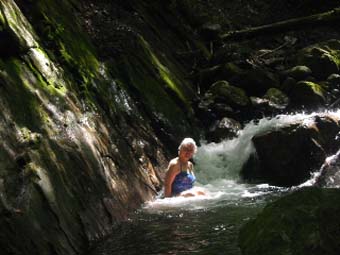
African Chi Dancing
[African dance] procures an interior peace, strength, health and a vigorous inspiration because dance allows the being to resonate from time to time with the rhythm of nature.
—Alphonse Tierou, African Dance Is Life
led by Gena Corea
Thursdays, 6:30-8p.m., beginning September 16, 2010.
$60 for a series of six classes or $15/class for drop-in.
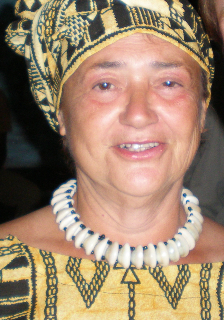 In this beginners’ African dance class, we’ll learn the ABCs of African movement. Then we’ll create circle dances with the movements as Lauren Bernozzi , Sara West and Nick Gangel drum the spirits down to earth for us.
We will pay attention to the chi life force being circulated in our individual bodies and in the larger body created when we dance together. At the end of class, we’ll channel that energy to heal ourselves and each other.
Most cultures recognize and work with the life force the Chinese calls “chi” and the Japanese “ki” (as in the healing form “Rei-ki). Hawaiians use dance and music (the hula) to generate this energy for healing. They call the energy “mana.” Brazilians playing Capoeira, a martial art disguised as a dance, also recognize that when a group gathers to make music, sing and dance, a healing energy builds that can be used to heal all in the circle. Brazilians term the energy “ache.”
Among a South African ethnic group, the life force, called “nung”, is stored in the base of the spine and in the lower abdomen. Through music and ecstatic dance, the nung heats up. When the fingers are trembling with nung, the shaman projects arrows of it to anyone in the group who needs healing.
In our class, after a brief chi gong cool-down, we will explore ways to direct the chi (nung/mana/ache/ki) generated in the dance to heal ourselves.
African Chi Dance is great for:
- Those attracted to cool African dance moves who feel they’re too hard to learn. (We’ll take it slowly and repeat moves often.)
- Those with chronic diseases who want to move joyfully and become dancing healers.
- Those who yearn to live in enlivened and self-reliant communities, learning skills to use in Neighborhood Health Tontines.
Gena Corea began training in African dance in 1990. In 2002, she invited master dance Caro Diallo, whom she had met in Dakar, Senegal in 1993, to come to Brattleboro to launch African dance classes in Southern Vermont. The following year, she originated the annual Abene African Dance Festival featuring Caro.
Gena has spent five winters studying dance with Caro and his Black Soofa dance company at their cultural center in Abene, Senegal. While in Abene, she works with a local doctor and his patients, healing with chi (nung/ache/mana/ki) in a practice called sabuhalla.
Gena Corea has performed West African dance in shows in Massachusetts in such venues as Club Passim, Harvard Square, Bookcellar Café, Naked City Café, the Dance Complex, and Massachusetts Institute of Technology (all in Cambridge) and at Babson College in Wellesley.
In Vermont and New Hampshire, she performed with Caro Diallo’s dance troupe at Boccelli’s-on-the-Canal, Neumann Hall, Stone Church, and Keene State College. In Ziguinchor, Senegal, Gena performed with Diallo and his Black Soofa dance company in four shows.